绝命毒师第五季
A mountain standing for millennia finds new ways to tell its story online_我的网站

一 |

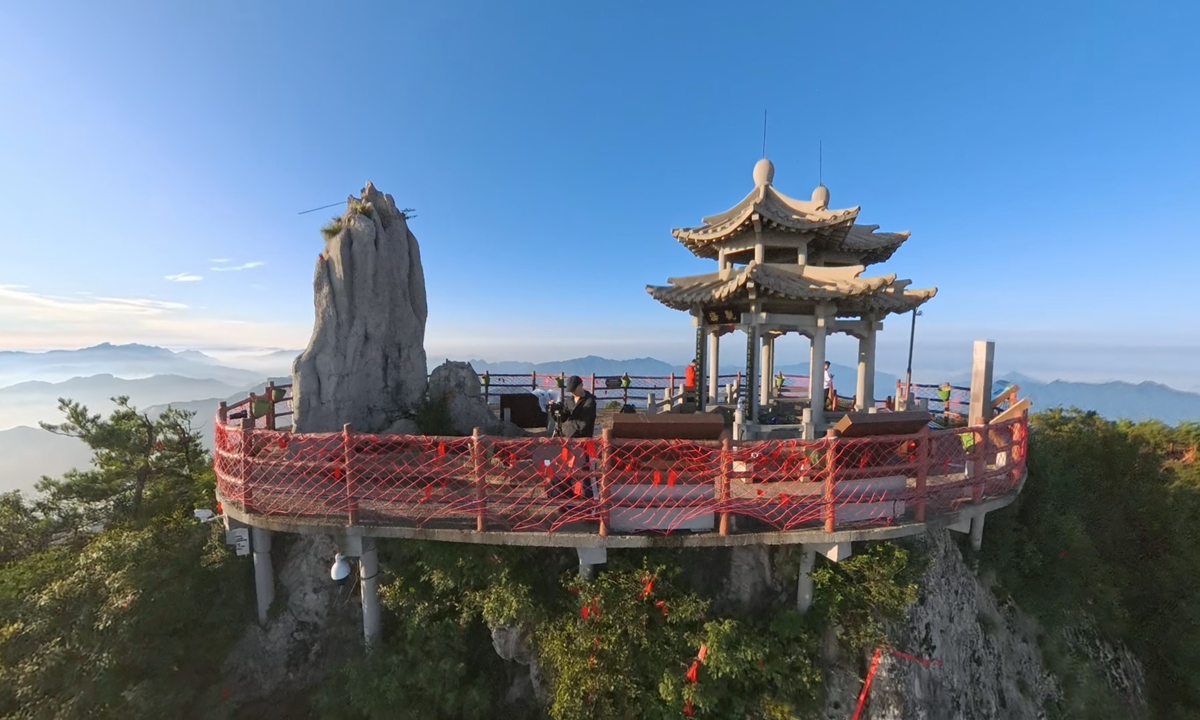
A sea of clouds rolls across Laojun Mountain in Luoyang, Central China's Henan Province, with golden-roofed temples emerging through the mist, on July 6, 2026. Photo: VCGFor 30 days, Li Sichen got up before sunrise on top of Laojun Mountain, camera in hand, chasing clouds across the peaks. Some mornings, the sea of clouds rolled in before breakfast; on others, he had to keep moving, checking one viewpoint after another in search of a patch of mist worth filming. By the time he got back to the foot of the mountain, the 22-year-old had spent a month watching the same landscape change by the hour - all for a job that had first caught the internet's attention for one simple reason: 60,000 yuan ($8,900) a month to "watch clouds."
It all began with Laojun Mountain's spectacular summer cloud season. In a recruitment notice issued in July, operator of the scenic spot said July and August offer some of the best chances to see seas of clouds there, and it wanted someone to stay on the mountain and record how the spectacle changed from day to day. The unusual job posting unexpectedly drew over 3,500 entries in about a week, with Li eventually emerging as the mountain's first "cloud sea observer."
Located in Luanchuan county of Luoyang, Central China's Henan Province, Laojun Mountain rises to 2,217 meters and is known for its dramatic peaks, seas of clouds and long history of Taoist culture, according to the mountain's official website.
But how does it feel like to work on top of the mountain, far away from online shopping, food delivery and party with friends?
An unconventional way of seeing "My days on the mountain quickly settled into a rhythm shaped partly by the clouds, and partly by the cafeteria," Li told the Global Times. He usually got up around 5 am to shoot the sunrise and clouds, had an early lunch as the cafeteria opens at 11 am, spent the afternoon exploring around the mountain, then rushed to cafeteria for dinner before heading back to the observation spots for sunset. The day often ended with editing footage until close to midnight.
"Sometimes there is nothing in front of you from one viewpoint, but after walking a little farther and changing the angle, a small sea of clouds jumps in front of my eyes."
Professional photographers usually seek higher vantage points for better views of seas of clouds, while Li sometimes headed down toward the mountainside. "That was something I really hadn't expected," Zhang Pengyuan, a manager at Laojun Mountain, told the Global Times.
"This was exactly why the scenic spot wanted eyes from outside to find the beauty of the mountain through a different angle," Zhang said.
What set Li apart, Zhang joked, was precisely that he was "not professional." Unable to calculate cloud heights or predict the perfect shooting conditions from weather forecast, Li relied on the simplest method: going out again and again to see what had changed. That sometimes led to compositions the scenic spot's own photographers had never considered. "What he recorded was closer to what an ordinary visitor could actually see," Zhang said.
Li had arrived on the mountain with little professional photography experience. Media reports said that before taking the job, he was not yet proficient with a drone, and his previous videos usually drew only a few hundred or a few thousand views. However, that changed almost overnight when his application video took off, eventually drawing tens of thousands of likes and helping him stand out from more than 3,500 applicants.
The "cloud observer" Li Sichen adjusts filming equipment at an attraction point on Laojun Mountain. Photo: Courtesy of Li Sichen
From visitors to storytellers Beyond Laojun Mountain, scenic spots across China have increasingly been inviting young people to take part in content creation, event planning and tourism promotion, often through unconventional jobs tailored to the language and habits of social media.
According to Southern Metropolis Daily, Shennong Valley National Forest Park in Central China's Hunan Province recently recruited 10 "wild men" to dress in animal costumes and interact with visitors in the forest.
The Dixin Valley Scenic Area in Hubei Province also drew more than 3,000 applicants for 12 summer trainee positions to play as NPCs, produce creative content, and work as photographer and tour guide for 10 days.
The idea goes beyond novelty. Scenic spots are increasingly turning to young creators who understand short videos, online trends and the interests of their peers. A tourism short-video contest in Jinhua, East China's Zhejiang Province held in 2025 featured university students presenting the city through vlogs, traditional-style costume transformations and AI-generated art - part of a broader effort to let young people help shape how destinations are seen and experienced.
Young travelers are increasingly drawn to experiences that are immersive, participatory and easy to share, reflecting a broader shift in China's tourism market from "standardized sightseeing" toward more personalized experiences, Zhang Lingyun, a professor and the executive editor-in-chief of the Tourism Tribune, told the Global Times.
As tourism offerings have expanded and competition has grown, travelers have more choices. Changing consumer preferences in China mean many young people now look beyond simply "seeing the beauty" to experiences that feel distinctive, personal and worth sharing on social media.
The internet and social media have accelerated this shift, Zhang said, adding that as "digital natives," Chinese young people are becoming increasingly fluent in short videos, social platforms and online interaction. By bringing young people directly into content production, scenic spots can move beyond simply guessing what tourists want through surveys, and learn from what they actually create and share.
Initiatives such as the "cloud sea observer" can help destinations rediscover themselves through a visitor's eyes while reaching younger audiences more effectively. The goal, Zhang noted, remains the same: better meeting tourists' needs, even as the tools, channels and participants have changed, he said.
On his final morning on Laojun Mountain, Li got up early once again to watch the sunrise. But this time, he lowered the camera.
"That was when I suddenly realized how beautiful the mountain really was," Li said. After 30 days of chasing clouds, searching for angles and turning each day into footage to share with other young Chinese in the online community, he was finally able to simply look.
When Li was really enjoying the last moments on the mountain, he - just like the line from comedy The Secret Life of Walter Mitty - "didn't like to have the distraction of the camera. Just wanted to stay in it."
。 张家界8月25日电 (聂奇 高双志 向剑锐 庹海霞)暑期旅游进入尾声,湖南张家界入境游、跨省游依然火热。为迎接来自全球各地的游客,当地加密国内国际航线,推出多种优惠服务;地面配上定制客运,把游客从机场、高铁站直接送到民宿和景点门口。

二 | 立体交通加惠民服务,不断激活张家界暑期文旅消费。8月13日,游客在湖南张家界武陵源袁家界景区参观。张洪涛 摄 今年暑期,张家界荷花国际机场共执飞40条航线,覆盖境内外44个城市,通过“国际直达+国内中转”模式,为八方游客奔赴张家界搭建高效便捷的空中桥梁。“在持续加密东北亚、东南亚国际航线的基础上,我们大力开拓欧美远程中转客源,吸引欧美游客将张家界设为来华行程第二站。”张家界荷花国际机场副总经理康洋说。 此外,张家界还联动各大航空公司、文旅部门推出“一张机票游张家界”专属福利。

三 | 旅客凭7日内湖南省内机场乘机证明可享张家界景区及酒店、餐饮、演艺多重优惠,让游客在感受民俗文化的同时尽享实惠。 针对入境游服务需求,张家界启动了暑期多语种涉外志愿服务专项行动。志愿者团队可为境外游客提供多语种翻译、出行咨询、动线引导、文旅推介等一站式暖心服务,有效破解外籍游客语言沟通壁垒,全面提升入境游客出行体验。

四 | “张家界真是一座超棒的城市。”俄罗斯游客卡尼韦茨(Kanivets)说,景区的俄罗斯语志愿者给他们提供了很大的帮助,“我们之前都不知道,在这里购物可以享受5%的折扣”。 为畅通游客出行“最后一公里”,张家界交通运输部门持续推进旅游交通综合改革,从2024年开始实施城景客运专线建设,推出“专线+定制”运营模式,投入了78辆纯电客运车辆专项保障运力;并推出景区定制客运服务,实现机场、高铁站、酒店民宿、各大景区“点到点”“门到门”全域覆盖服务。“有了城景巴士私人订制,我们进出各景区都比较方便,节省了不少的时间。”湖北游客汪燕说。

五 | 丰富的文旅产品,优质的生态环境和舒适的游览体验,助力张家界暑期文旅消费热潮。

六 | 统计数据显示,截至8月24日,张家界景区今年共接待游客超510万人次,同比增长16.88%,带动消费超52亿元。
Current article:http://848yb.laojiusidaosenleliao.bond/list_3k09j/z8t8c.html
Published on:13:32:53