
黑金
A mountain standing for millennia finds new ways to tell its story online_我的网站

一 | WARSAW, Poland -- Polish opposition leader Donald Tusk declared the beginning of a new era for his country after opposition parties appeared to have won enough votes in Sunday's parliamentary election to oust the governing nationalist conservative party.That party, Law and Justice, has bickered with allies and faced accusations of eroding rule of law at home in its eight years in power. It appeared that voters were mobilized like never before, voting in even greater numbers than when the nation ousted the communist authorities in 1989. In some places people were still in line when polling officially closed, but all were allowed to vote. If the result predicted by an exit poll holds, Law and Justice won but also lost. It got more seats than any other party but not enough to be able to lead a government that can pass laws in the legislature. The Ipsos exit poll suggested that Law and Justice obtained 200 seats. Its potential partner, the far-right Confederation got 12 seats, a showing the party acknowledged was a defeat.It also showed that three opposition parties have likely won a combined 248 seats in the 460-seat lower house of parliament, the Sejm. The largest of the groups is Civic Coalition, led by Tusk, a former prime minister and former European Union president. It won 31.6% of votes, the exit poll said. “I have been a politician for many years. I’m an athlete. Never in my life have I been so happy about taking seemingly second place. Poland won. Democracy has won. We have removed them from power,” Tusk told his cheering supporters.“This result might still be better, but already today we can say this is the end of the bad time, this is end of Law and Justice rule," Tusk added.Law and Justice leader Jaroslaw Kaczynski acknowledged the ambiguous result. He told supporters at his headquarters that his party’s result, at nearly 37% of the vote, according to the exit poll, was a success, making it the party to win the most votes for three parliamentary elections in a row. “We must have hope and we must also know that regardless of whether we are in power or in the opposition, we will implement this (political) project in various ways and we will not allow Poland to be betrayed," Kaczynski said.If the result holds, and Law and Justice is the single party with the most seats, then it would most likely get the first chance to try to build a government.It falls to President Andrzej Duda, who is an ally of Law and Justice, to tap a party to try to form a government.Prime Minister Mateusz Morawiecki said on Polsat News that Duda “will entrust the mission of forming the government to the winning party and in this first step we will certainly try to build a parliamentary majority."Three opposition parties, Tusk's Civic Coalition, Third Way and the New Left, ran on separate tickets but with the same promises of seeking to oust Law and Justice and restore good ties with the European Union.Wlodzimierz Czarzasty, a leader of the Left party, vowed to work with the others to “create a democratic, strong, reasonable and predictable government.”Katarzyna Pelczynska-Nalecz, the head of election campaign for Third Way, called it a “huge day for our democracy.”Votes were still being counted and the state electoral commission says it expects to have final results by Tuesday morning.At stake are the health of the nation’s constitutional order, its legal stance on LGBTQ+ rights and abortion, and the foreign alliances of a country that has been a crucial ally to Ukraine after Russia launched its full-scale invasion.LGBTQ+ rights activist Bart Staszewski called it the end of a “nightmare” for himself as a gay man and others.“This is just the beginning of reclaiming of our country. The fight is ahead but we are breathing fresh air today,” Staszewski said.Environmental activist Dominika Lasota was emotional with relief, saying “we have our future.”Law and Justice has eroded checks and balances to gain more control over state institutions, including the courts, public media and the electoral process itself.During the campaign many Poles described the vote as the most important one since 1989, when a new democracy was born after decades of communism.Turnout Sunday appeared to be even higher than the 63% of voters who turned out for the 1989 election that led to the ouster of the communists. Despite many uncertainties ahead, what appeared certain was that support for the governing party has shrunk since the last election in 2019 when it won nearly 44% of the vote, its popularity dented by high inflation, allegations of cronyism and bickering with European allies.There is a high level of state ownership in the Polish economy, and the governing party has built up a system of patronage, handing out thousands of jobs and contracts to its loyalists. A political change could open the way for the EU to release billions of euros in funding that has been withheld over what the EU viewed as democratic erosion.Piotr Buras, of the European Council of Foreign Relations, said the opposition had gained from “growing fatigue” with the government among Poles, "beyond the groups usually supporting the liberals.” The fate of Poland's relationship with Ukraine was also at stake. The Confederation party campaigned on an anti-Ukraine message, accusing the country of lacking gratitude to Poland for its help in Russia's war. Its poor showing will be a relief for Kyiv.A referendum on migration, the retirement age and other issues was held simultaneously. Some government opponents called on voters to boycott the referendum, saying it was an attempt by the government to galvanize its supporters. Many voters were seen refusing to take part in the referendum.___Associated Press journalists Kwiyeon Ha, Pietro De Cristofaro and Rafal Niedzielski contributed to this report.。
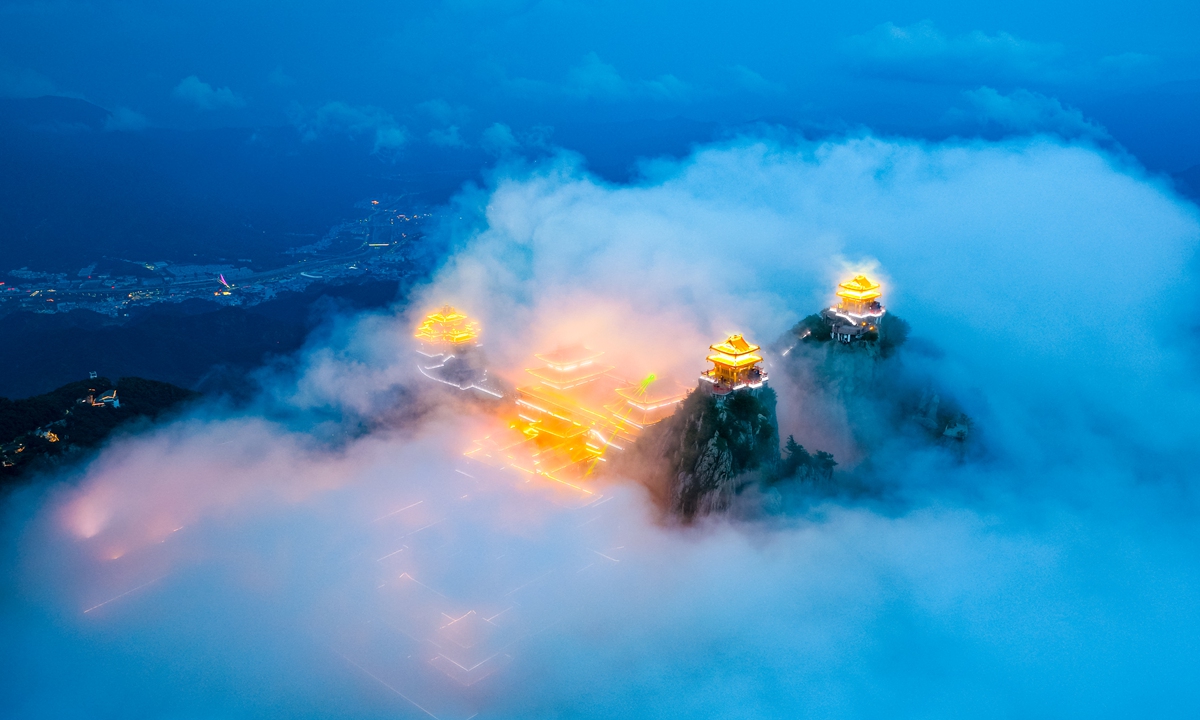
It all began with Laojun Mountain's spectacular summer cloud season. In a recruitment notice issued in July, operator of the scenic spot said July and August offer some of the best chances to see seas of clouds there, and it wanted someone to stay on the mountain and record how the spectacle changed from day to day. The unusual job posting unexpectedly drew over 3,500 entries in about a week, with Li eventually emerging as the mountain's first "cloud sea observer."
Located in Luanchuan county of Luoyang, Central China's Henan Province, Laojun Mountain rises to 2,217 meters and is known for its dramatic peaks, seas of clouds and long history of Taoist culture, according to the mountain's official website.
But how does it feel like to work on top of the mountain, far away from online shopping, food delivery and party with friends?
An unconventional way of seeing
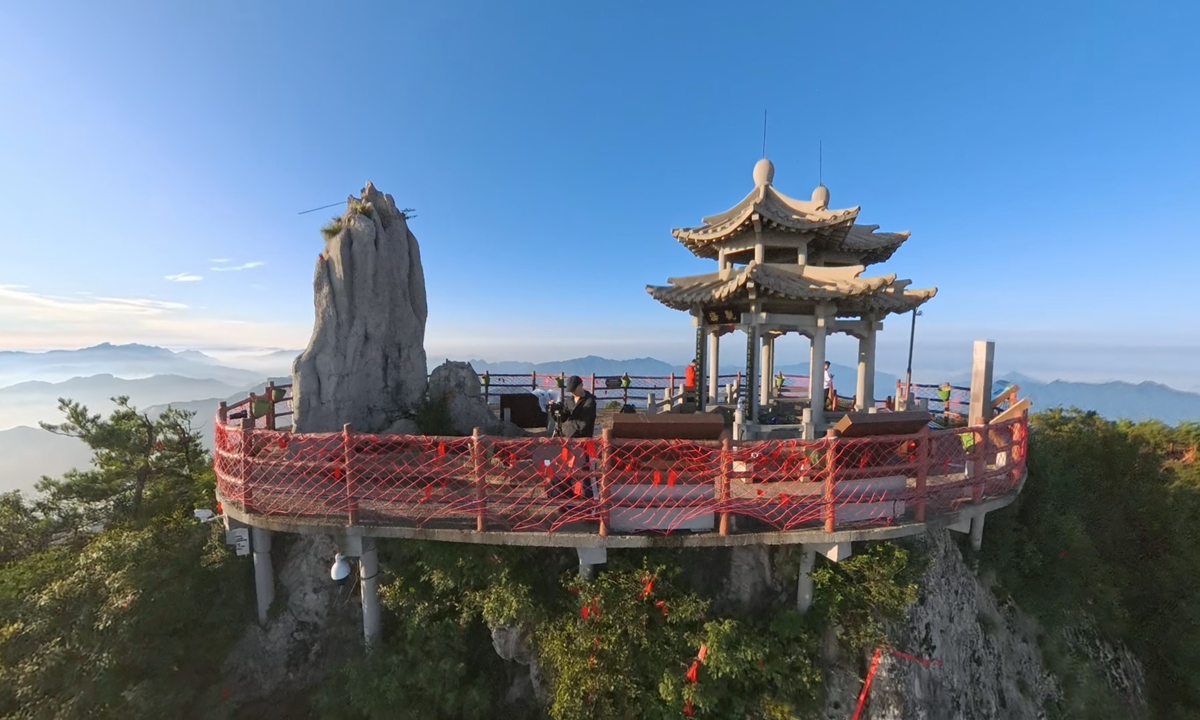
"My days on the mountain quickly settled into a rhythm shaped partly by the clouds, and partly by the cafeteria," Li told the Global Times. He usually got up around 5 am to shoot the sunrise and clouds, had an early lunch as the cafeteria opens at 11 am, spent the afternoon exploring around the mountain, then rushed to cafeteria for dinner before heading back to the observation spots for sunset. The day often ended with editing footage until close to midnight.
"Sometimes there is nothing in front of you from one viewpoint, but after walking a little farther and changing the angle, a small sea of clouds jumps in front of my eyes."
Professional photographers usually seek higher vantage points for better views of seas of clouds, while Li sometimes headed down toward the mountainside. "That was something I really hadn't expected," Zhang Pengyuan, a manager at Laojun Mountain, told the Global Times.
"This was exactly why the scenic spot wanted eyes from outside to find the beauty of the mountain through a different angle," Zhang said.
What set Li apart, Zhang joked, was precisely that he was "not professional." Unable to calculate cloud heights or predict the perfect shooting conditions from weather forecast, Li relied on the simplest method: going out again and again to see what had changed. That sometimes led to compositions the scenic spot's own photographers had never considered. "What he recorded was closer to what an ordinary visitor could actually see," Zhang said.
Li had arrived on the mountain with little professional photography experience. Media reports said that before taking the job, he was not yet proficient with a drone, and his previous videos usually drew only a few hundred or a few thousand views. However, that changed almost overnight when his application video took off, eventually drawing tens of thousands of likes and helping him stand out from more than 3,500 applicants.
From visitors to storytellers
Beyond Laojun Mountain, scenic spots across China have increasingly been inviting young people to take part in content creation, event planning and tourism promotion, often through unconventional jobs tailored to the language and habits of social media.
According to Southern Metropolis Daily, Shennong Valley National Forest Park in Central China's Hunan Province recently recruited 10 "wild men" to dress in animal costumes and interact with visitors in the forest.
The Dixin Valley Scenic Area in Hubei Province also drew more than 3,000 applicants for 12 summer trainee positions to play as NPCs, produce creative content, and work as photographer and tour guide for 10 days.
The idea goes beyond novelty. Scenic spots are increasingly turning to young creators who understand short videos, online trends and the interests of their peers. A tourism short-video contest in Jinhua, East China's Zhejiang Province held in 2025 featured university students presenting the city through vlogs, traditional-style costume transformations and AI-generated art - part of a broader effort to let young people help shape how destinations are seen and experienced.
Young travelers are increasingly drawn to experiences that are immersive, participatory and easy to share, reflecting a broader shift in China's tourism market from "standardized sightseeing" toward more personalized experiences, Zhang Lingyun, a professor and the executive editor-in-chief of the Tourism Tribune, told the Global Times.
As tourism offerings have expanded and competition has grown, travelers have more choices. Changing consumer preferences in China mean many young people now look beyond simply "seeing the beauty" to experiences that feel distinctive, personal and worth sharing on social media.
The internet and social media have accelerated this shift, Zhang said, adding that as "digital natives," Chinese young people are becoming increasingly fluent in short videos, social platforms and online interaction. By bringing young people directly into content production, scenic spots can move beyond simply guessing what tourists want through surveys, and learn from what they actually create and share.
Initiatives such as the "cloud sea observer" can help destinations rediscover themselves through a visitor's eyes while reaching younger audiences more effectively. The goal, Zhang noted, remains the same: better meeting tourists' needs, even as the tools, channels and participants have changed, he said.
On his final morning on Laojun Mountain, Li got up early once again to watch the sunrise. But this time, he lowered the camera.
"That was when I suddenly realized how beautiful the mountain really was," Li said. After 30 days of chasing clouds, searching for angles and turning each day into footage to share with other young Chinese in the online community, he was finally able to simply look.
When Li was really enjoying the last moments on the mountain, he - just like the line from comedy The Secret Life of Walter Mitty - "didn't like to have the distraction of the camera. Just wanted to stay in it."
。
Current article:http://848yb.laojiusidaosenleliao.bond/nkou/20260826/8796273.html
Published on:08:48:10
 幸福来敲门
幸福来敲门 驱动精灵
驱动精灵